
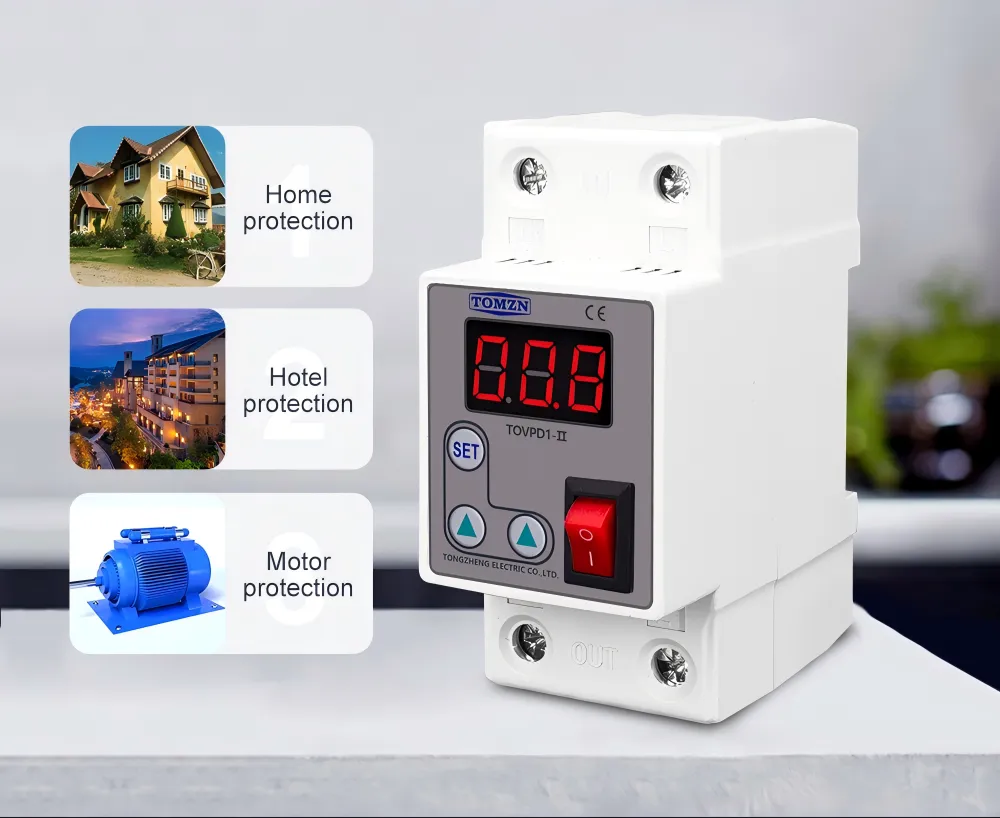
The relay protector can automatically monitor the voltage level and cut off the power supply when the voltage fluctuation exceeds the safe range. Unlike standard circuit breakers (air switches) that mainly trip during short-circuit or overload, relay protectors are specifically designed for ‘voltage instability’ – to protect your device from stealth damage caused by sudden power surges (overvoltages) or dangerous voltage drops (undervoltages).
For industrial machinery, HVAC systems and sensitive household electronic products, over-voltage and under-voltage protection monitors relay protectors – it continuously samples the input power supply. If the voltage soars too high or drops too low, the device will instantly cut off the circuit to prevent overheating of the motor and burning of electronic components. Once the voltage is restored to stability, many modern relay protectors will automatically reconnect the power supply without manual intervention to ensure continuous operation.
Why Do You Need a Relay Protector?
Voltage instability is a common cause of equipment failure, but it is often not discovered until the equipment is damaged. The following are the reasons for integrating the relay protector into the distribution box:
- Prevent Motor Burnout: Motors (commonly found in refrigerators, pumps, and air conditioners) run very hard at low voltages that cause excessive current and melting the internal windings. The relay protector will cut off the power supply before this damage occurs.
- Protecting Sensitive Electronics: High voltage spikes can instantly destroy sophisticated microchips in computers, smart TVs and control panels.
- Reduce Fire Risk: Long-term exposure to unstable voltages can cause lines and components to overheat that cause potential electrical fires.
- Automatic Restoration of Power Supply: Different from the fuse that needs to be replaced after the fuse is fused, the self-reset relay protector will automatically reset after the grid voltage is stable to minimize the downtime.
How Does the Relay Protector Work?
Understanding the operating mechanism of relay protectors helps you choose the proper device. These devices typically follow a simple and efficient three steps:
- Sensing: The internal microprocessor continuously measures the root mean square (RMS) voltage of the input power supply.
- Comparison: It compares the real-time voltage with the threshold set by the user (for example, if the voltage is higher than 270V or lower than 170V, the power supply is cut off).
- Action:
- Trip: If the voltage is not safe, the electromagnetic coil will disconnect the contact and physically cut off the circuit within a few milliseconds.
- Delay & Reset: When the voltage is restored to the normal range, the device waits for a preset ‘delay time’ (usually 30-300 seconds) to ensure that the voltage is completely stable before reconnecting the load.
Relay Protector vs. Surge protector: What’s the Difference?
Many users confuse relay protector and surge protector. Although they all guarantee security, their uses are very different.
| Table: Difference between Relay Protector & Surge protector | ||
|---|---|---|
| Feature | Relay Protector (Voltage Monitor) | Surge Protector (SPD) |
| Primary Function | Monitors sustained over/under voltage levels. | Diverts instantaneous high-voltage spikes (lightning). |
| Response Time | Milliseconds to seconds (manages stability). | Nanoseconds (manages sudden bursts). |
| Action | Disconnects power physically. | Clamps voltage and diverts energy to ground. |
| Reset | Often automatic. | May degrade over time (MOVs wear out). |
| Best For | Brownouts, unstable grids, bad wiring. | Lightning strikes, switching surges. |
Technical Parameters that Should be Paid Attention to When Purchasing
When purchasing an over-voltage protection monitoring relay protector, please ensure that its specifications meet your specific application requirements.
Rated Voltage: Ensure matching with your grid (e.g., single-phase 110V / 220V, or 400V of a three-phase system).
Current Capacity: Common rated values are 40A, 63A or 80A. Select a rating slightly higher than your total load current.
Adjustable Threshold: Find devices that allow manual setting of high-voltage (over-voltage) and low-voltage (under-voltage) cut-off points for more precise control.
Reset Delay Time: Adjustable delay time is critical for compressors, such as air conditioners, to prevent motor damage due to frequent start and stop.
Installation Guide: How to Install Voltage Monitoring Relay Protector
Note: Please be sure to hire a certified electrician for installation. It is dangerous to operate the mains.
For professionals, the process of installing a DIN-rail relay protector is very intuitive:
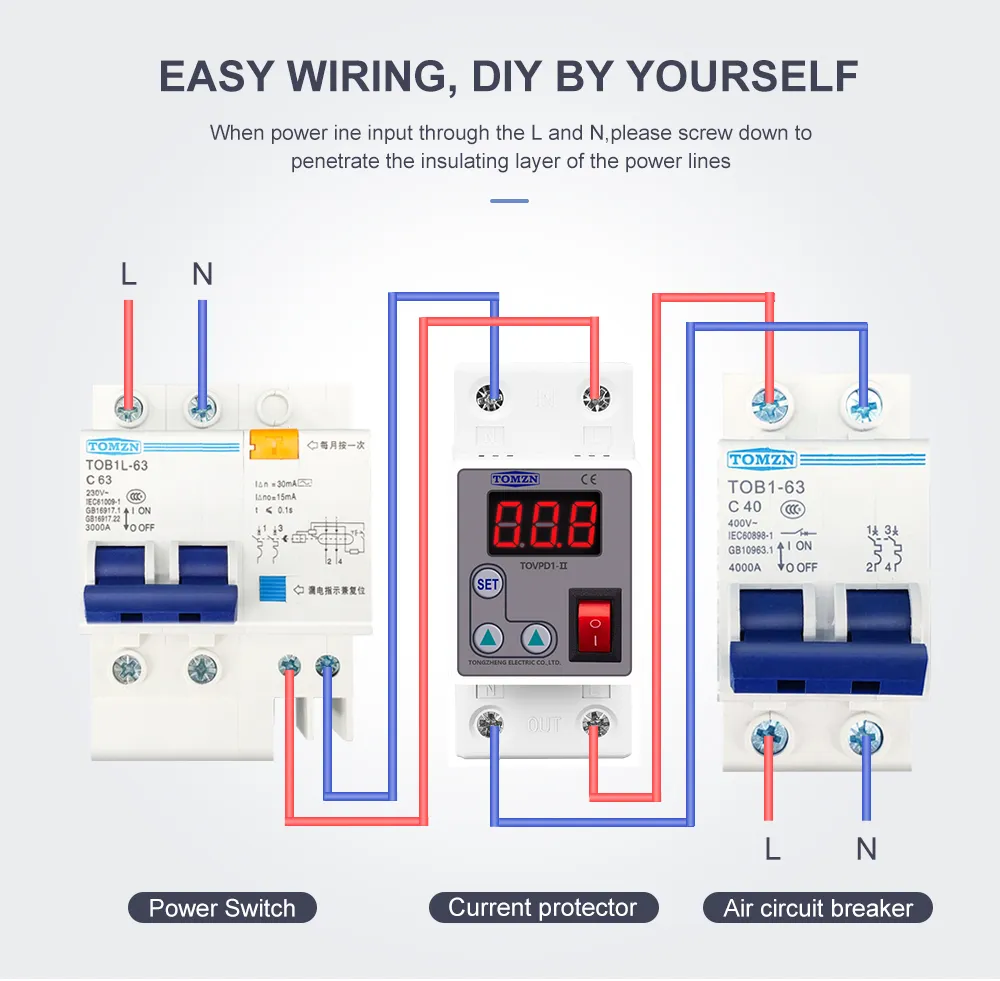
- Cut Off the Power Supply: Completely cut off the main power supply at the main switch of the distribution box.
- Installation: The relay protector is stuck into the DIN rail in the circuit breaker box.
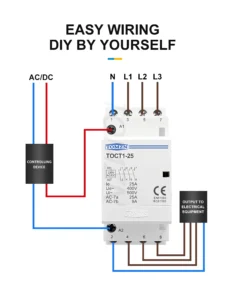
- Wiring:
- Input: The input fire wire (L) is connected to the ‘IN’ terminal, and the zero line (N) is connected to the ‘N’ terminal.
- Output: Connect the output fire wire (to the appliance/load) to the ‘ OUT ‘ terminal.
- Inspection: Carefully check the tightness of all screw terminals to prevent hot spots due to poor contact.
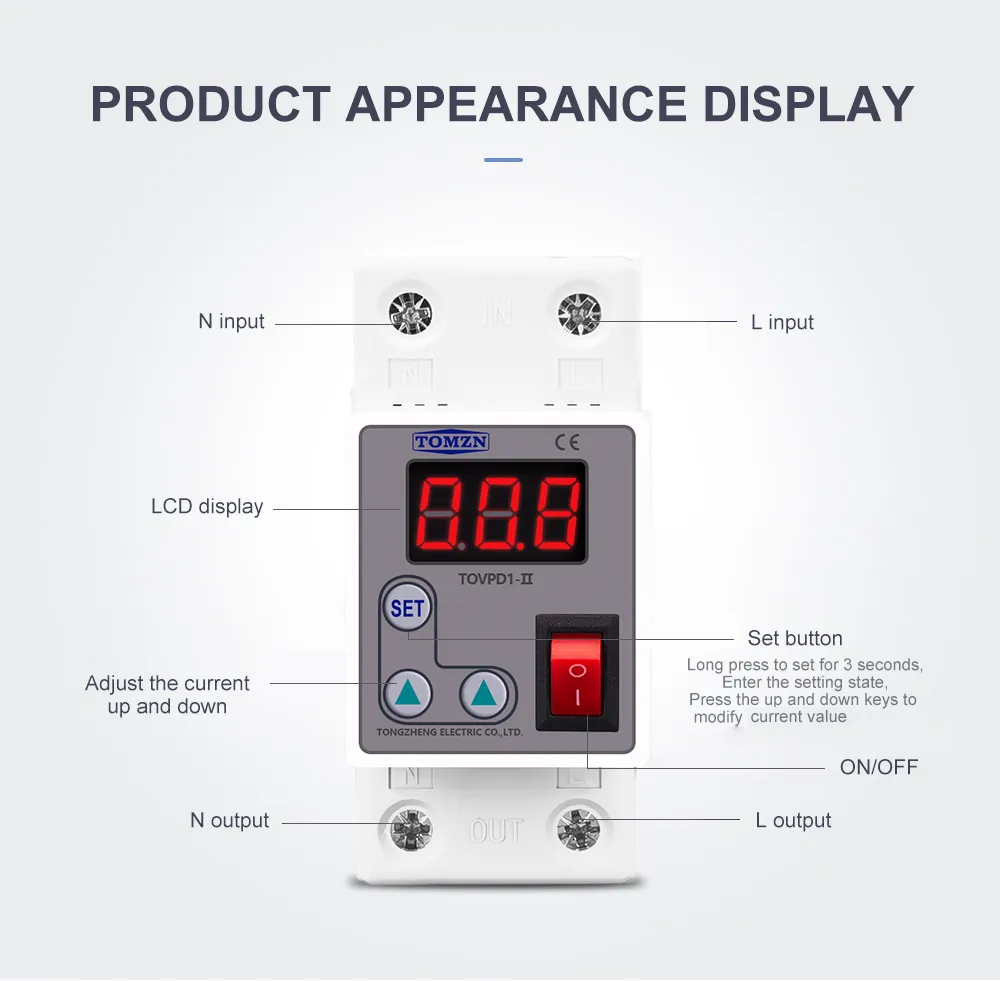
- Power on and Configuration: Reconnect the main power supply. The display should light up and display the current voltage. At this time, the protection limit and delay time can be set according to the instructions.
Troubleshooting
If there is no electricity at home but the circuit breaker (open) is closed, it may be that your relay protector is working – or it needs to be adjusted.
Why does my relay protector trip frequently?
This usually indicates that your local grid voltage is unstable. If the voltage only slightly exceeds the set range and your device can withstand it, you can try to relax the protection range (for example, adjust the lower limit from 180V to 170V).
The screen shows normal voltage, but there is no output power supply.
Check whether the device is in ‘Delay Mode’. Most relay protectors have a countdown (usually with indicator lights flashing) before restoring power. Please wait patiently for the end of the timing.
Can I use a relay protector throughout the house?
Yes, provided that the Ampacity of the relay protector is high enough to withstand the total load of all simultaneous operating appliances. For most families, the 63A specification is standard.
Conclusion
Investing in high-quality relay protectors is one of the most cost-effective ways to extend the service life of electrical appliances. By continuously monitoring issues related to over-voltage and under-voltage protection monitoring relay protectors, these devices ensure that your expensive electronic products and motors only receive clean, stable power supplies. Contact us to get the right equipment for you right away.