When building a photovoltaic system, the components you choose determine the efficiency and safety of energy harvesting. Although solar panels and inverters are often the most concerned, solar connectors are the key to connecting the entire system together. Even the most expensive components cannot transmit power effectively without reliable solar panel connectors.
We will discuss everything you need to know about solar connectors in this guide – from understanding different types of solar connectors to mastering the installation process. Whether you’re a DIY enthusiast or a professional installer, this guide ensures your system stays safe, waterproof and efficient.
What Are The Solar Connectors?
Solar connectors are dedicated electrical couplers used to connect solar panels in series or in parallel and connect them to inverters. Unlike standard connection nuts or tapes, solar panel electrical connectors are specifically designed to withstand harsh outdoor environments, high voltages and severe temperature fluctuations.
The main function of the solar module connector is to provide a strong, weatherproof connection to prevent accidental disconnection. Modern connectors have a locking mechanism and require special tools to unlock to ensure compliance with electrical safety specifications.
Why are they important ?
Safety: Prevent arc and short circuit.
Durability: Resists UV radiation and moisture intrusion.
Efficiency: High-quality connectors minimize resistance and ensure maximum power transmission.
What are the Types of Solar Connectors?
Over the years, the solar energy industry has continued to develop, and the types of solar panel connectors have also evolved. Although some old models have been eliminated, understanding these types can help maintain old systems or design new ones.
MC4 Solar Connector
MC4 solar connector is the most common connector in the field of modern photovoltaic. Almost all solar panels manufactured today are equipped with MC4-compatible leads.
Mechanism: Snap-lock mechanism.
Grade: Usually IP67 (waterproof) and UV resistance.
Voltage: 1000V to 1500V DC.
MC3 Solar Connector
This is the predecessor of the MC4. They use flexible rubber sleeves for waterproof sealing, but lack the forward locking mechanism required by modern electrical specifications (NEC 2008+). It is rarely used in new installations.
Amphenol H4
Amphenol H4 is typically marketed as a ‘ MC4 compatible ‘, although safety inspectors generally do not recommend mixing different brands. They are known for their high current carrying capacity and robust design.
Tyco Solarlok
These solar connectors were once popular, but have been basically replaced by the MC4 standard. They have different shell shapes and locking clips.
| Table: Comparison of Common Solar Connectors | |||
|---|---|---|---|
| Feature | MC4 Connector | MC3 Connector | Amphenol H4 |
| Locking System | Snap-lock (Tool required) | Friction fit (No lock) | Snap-lock |
| Waterproof | Yes (IP67/IP68) | Yes (IP65) | Yes (IP68) |
| Modern Usage | Standard | Obsolete | Common |
| Safety | High | Low | High |
Advantages of Solar Connectors
The use of high-quality solar connectors is not only for compliance, but also for the long-term healthy operation of the system. The following is the importance of investing in high-quality solar panel connectors:
- Waterproof Design: High-quality connectors with IP67 or IP68 grades can prevent corrosion caused by rain and snow.
- High Voltage Compatibility: Modern utility-scale systems typically operate at 1500V. The connector must be rated to withstand this load and will not melt or produce an arc.
- UV Resistant: As these components are placed on rooftops for more than 25 years, the plastic housing must be resistant to embrittlement caused by exposure to the sun.
- Low Contact Resistance: A high-quality connection ensures that the energy generated by the battery plate is actually transferred to the battery or the grid, rather than being lost as heat.
Selection Criteria for Solar Connectors
How to choose the right solar module connector for your project? Please consider the following factors:
- Cable Compatibility: Ensure that the connector seal sleeve is suitable for your cable diameter (usually 2.5mm2,4mm2 or 6mm2).
- Rated Voltage: residential system standard is 1000V. Commercial system please look for 1500V rating.
- Rated Current: The connector must be able to handle the maximum current (Imp) of the string plus the safety margin (usually 1.25 times).
- Brand Consistency: Try to use the same brand of connectors that are already on the solar panel lead. Blended brands (even if claimed to be ‘compatible’) can cause micro-arcs and fires over time.
For more details on electrical safety standards, you can refer to the National Electrical Code (NEC) guidelines regarding PV systems.
TOMZN Solar Connector
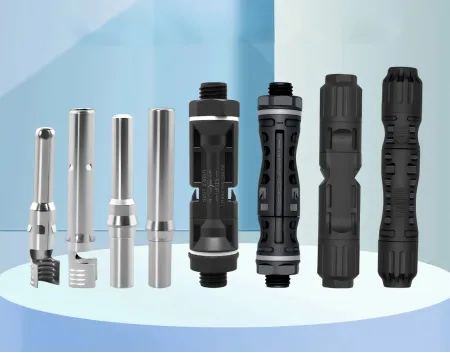
When looking for a reliable, high-spec solution, the TOMZN solar connector stands out as a robust option for modern installations. It meets the rigorous demands of high-voltage systems.
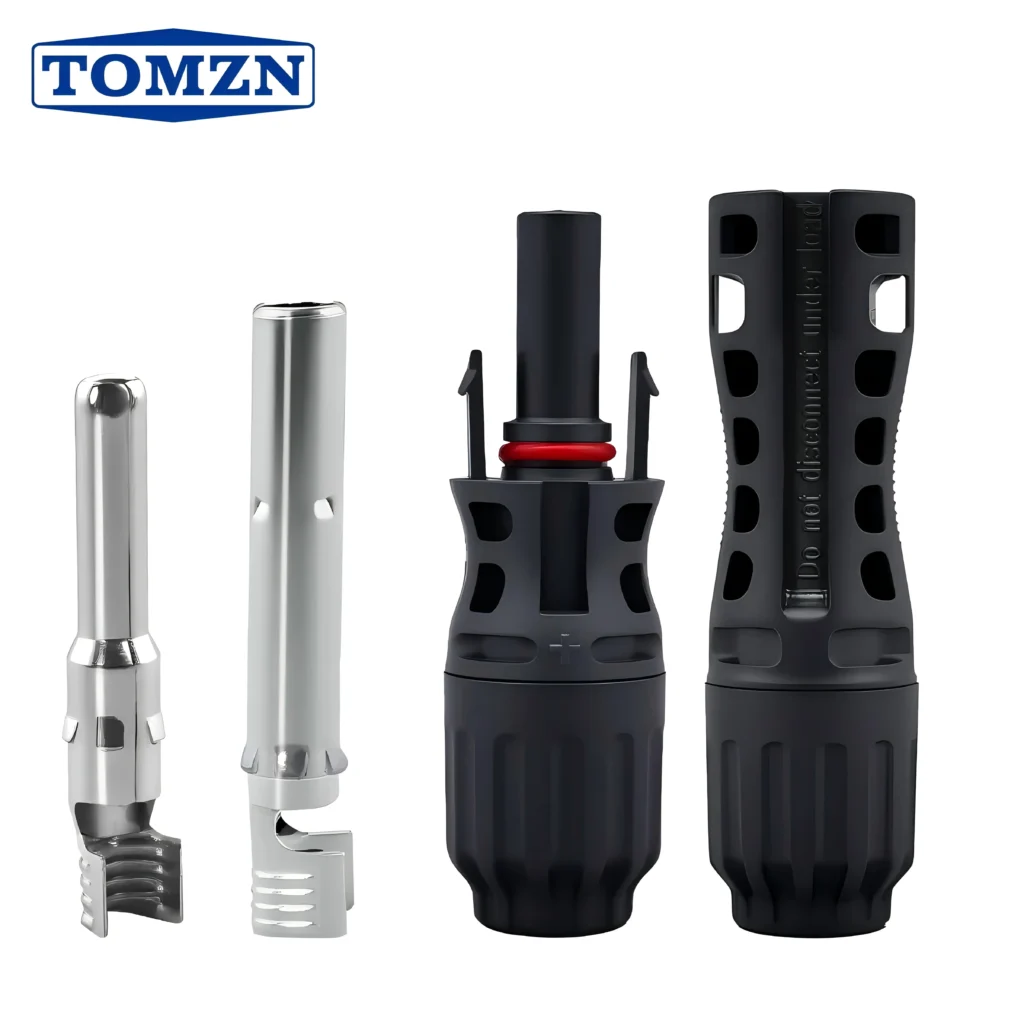
Description: MC4 1500V 32A
Feature:
- Waterproof Design: The connector features a waterproof design, ideal for outdoor solar panel installations
- Ease of Installation: Its user-friendly design facilitates easy installation, saving time and effort during setup.
- High Voltage Compatibility: Designed for 1500V photovoltaic systems, ensuring safe and efficient energy transfer.
- Reliable Quality: Produced in China, known for its reliable manufacturing standards, this connector promises durability and longevity.
- Versatile Application: Suitable for board end conjunction, inverters, and panels, offering versatile application in solar energy systems.
| Product Parameters Table | |
|---|---|
| Shell Material | PPO material |
| Core Material | Copper CN Nickel Plated SN |
| Wiring Specifications | 2.5/4.0/6.0 mm² |
| Temperature Range | -40℃ ~+125℃ |
| Insulation Resistance | >500M |
| Plug Resistance | <0.5MΩ |
| Protection Level | IP67 |
| Pollution Level | CATIII/2 |
How to Operate Solar Connectors?
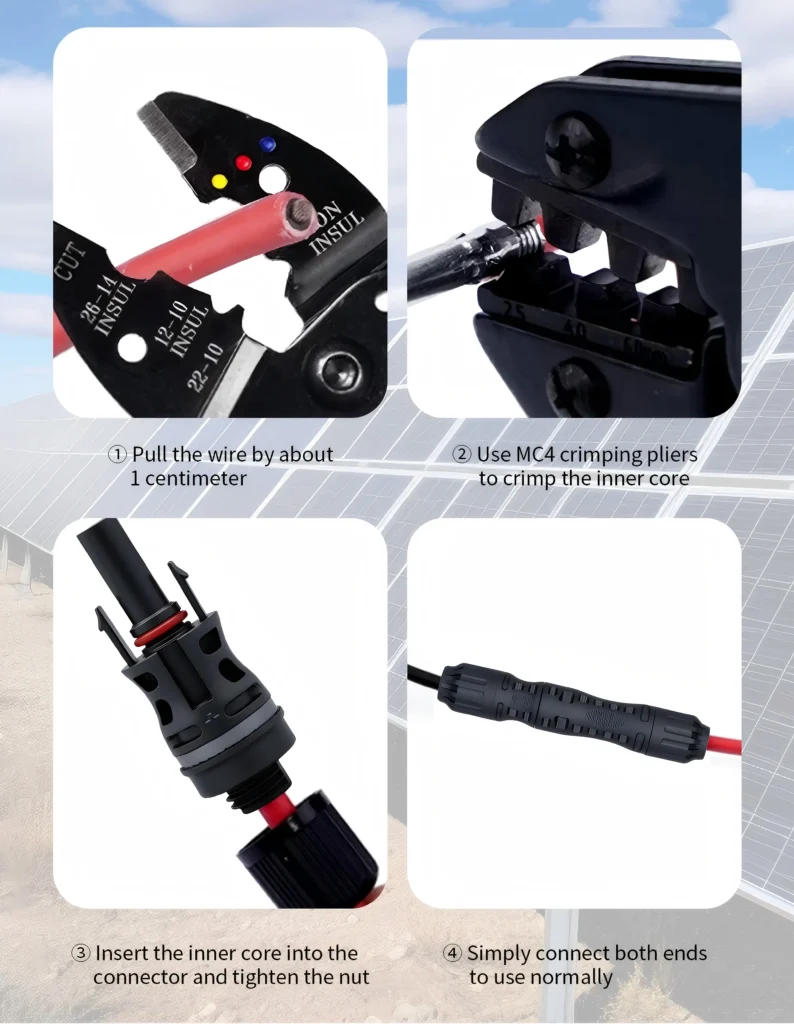
Installing solar connectors requires accuracy. Poor crimping is the main cause of solar system fires. Please follow the following steps for secure connection.
Tools You will Require:
- Wire Stripper
- MC4 Crimping Tool ( special mould required )
- Two MC4 wrenches
Step-by-step Installation
Strip the Wire: Stripping the insulation layer of the solar cable about 10-15mm. Take care not to cut the copper wire.
Insert the Pin: the metal crimping needle ( male needle or female needle ) on the exposed copper wire.
Note: The ‘male’ plastic shell corresponds to the ‘female’ metal needle, and vice versa. This is a common point of confusion!
Crimping: Insert the pin and wire into the crimping clamp. Squeeze until the ratchet releases. Pull the pin to ensure its fastening.
Assemble: Push the crimped pin into the back of the plastic connector housing until a distinct ‘Click’ sound is heard.
Tighten the Seal: Use the wrench to tighten the back cover (cable seal). This will make the rubber seal work to ensure that the device is waterproof.
Connect: Docking male and female connectors until they are latched.
Conclusion
Choosing the right solar connector and installing it properly can ensure the safety of your solar system and extend its service life. Choose a standard MC4 solar connector or a high-capacity model like the TOMZN 1500V can have a tight, water-resistant and electrically good connection that will keep your energy flowing for decades to come.
Can I mix different brands of solar connectors?
Although many connectors claim to be ‘MC4 compatible’, the best practice is to avoid hybrid brands. Small manufacturing tolerances may cause moisture entry or resistance to increase over time.
How to disconnect the MC4 connector?
Do not disconnect the solar connector when the system is loaded ( power generation ). This can lead to dangerous DC arcs. First, close the inverter or DC circuit breaker. Then, use the MC4 disconnect tool to press the locking plates and pull them apart.
What is the difference between 1000V and 1500V connectors?
A 1500V connector like the TOMZN solar connector has a thicker insulating layer and a larger spacing to prevent arcing at high voltages. They are essential for modern efficient string design that uses higher voltages to reduce line losses.
Are solar connectors waterproof?
Yes, most high-quality solar panel electrical connectors are rated IP67 or IP68. This means that they can withstand dust and temporary water immersion. However, do not immerse them permanently in the water on the roof.